


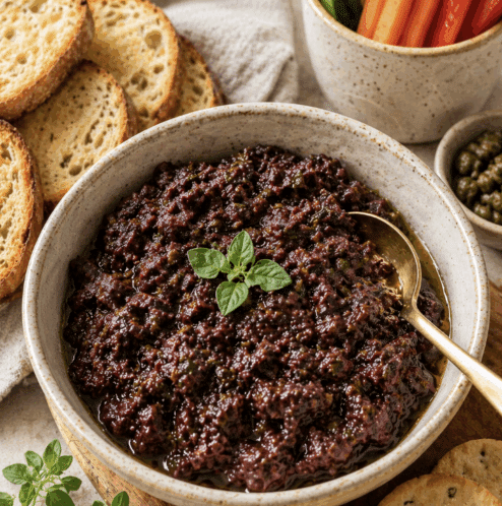
If you need a simple appetizer that feels a little more elevated than store-bought hummus, this Kalamata olive tapenade is an easy place to start.
It comes together quickly, uses pantry-friendly ingredients, and adds bold flavor without much effort. Whether you’re putting together a snack board, hosting friends, or just want something different to spread on toast or crackers, this is one of those recipes that fits into real life.
And importantly, it’s not complicated.
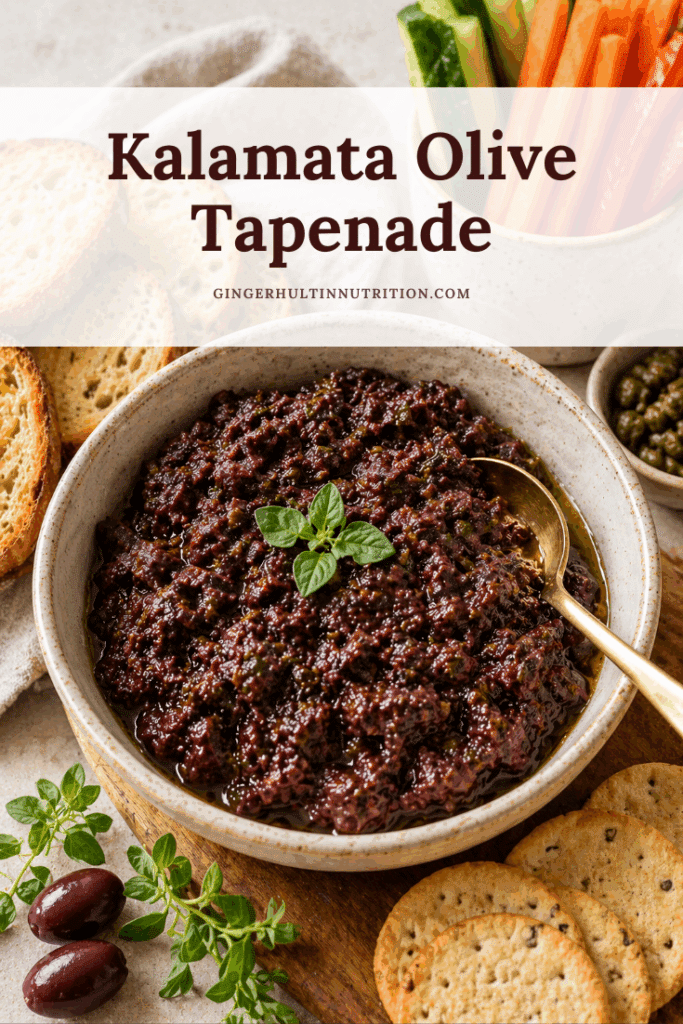
Tapenade is a Mediterranean spread traditionally made with olives, capers, olive oil, and herbs. This version highlights Kalamata olives, known for their rich, slightly fruity, and salty flavor.
It’s naturally:
You can serve it as a dip, spread, or even use it to build flavor into other meals.
This is one of those recipes that checks a lot of boxes without trying too hard.
Instead of focusing on restriction, this recipe is a good example of how adding flavorful, plant-forward foods can support overall eating patterns in a sustainable way.
This isn’t about labeling a single food as “anti-inflammatory” or “superfood,” but the ingredients in this tapenade do contribute to a balanced pattern of eating over time.
Kalamata olives are rich in monounsaturated fats, the same type of fat found in olive oil. These fats are associated with heart health and are a key part of Mediterranean-style eating patterns.
They also provide:
Capers are used in small amounts, but they’re surprisingly concentrated in beneficial plant compounds.
They contain quercetin, an antioxidant that helps protect against oxidative stress.
Even a small addition can enhance both flavor and nutritional value.
Fresh or dried herbs add more than just flavor.
They contribute:
Using herbs regularly is a simple way to build more nutrient density into meals without adding complexity.
Garlic is part of the allium family (along with onions and leeks) and has been widely studied for its potential role in:
It’s a small ingredient that adds both depth of flavor and functional benefit.
One of the best parts of this recipe is how versatile it is. You don’t have to overthink it.
Here are a few easy ways to use it:
A little goes a long way, so even a small batch can stretch across multiple meals.
Store in an airtight container in the refrigerator for up to 5 days.
You can also drizzle a thin layer of olive oil on top to help preserve freshness.
It can be part of a balanced eating pattern. It contains healthy fats from olives and olive oil, along with plant compounds from herbs and capers. Like many flavorful spreads, portion size matters, but it’s a nutrient-dense option compared to many processed dips.
Yes, this tapenade is naturally vegan and plant-based.
You can finely chop everything by hand, though the texture will be different. A food processor makes it quicker and more consistent.
It can be, depending on the olives and capers used. Adding lemon juice or pairing it with neutral foods like bread or vegetables helps balance the flavor.
This Kalamata olive tapenade is a good reminder that simple, flavorful foods can fit easily into a balanced way of eating.
It doesn’t require complicated prep or hard-to-find ingredients. It just adds something interesting to your plate in a way that’s practical and repeatable.
If you try it, let me know how you end up using it.
And if you need a couple more dips you can make in minutes, check out my: Easy Herbed Vegetarian Dip, Savory Almond Cilantro Dip, or Everything Tahini Citrus Sauce.
1. Place all ingredients in the bowl of a food processor.
2. Pulse until roughly combined.
3. Serve immediately or hold in the refrigerator and serve cold.

GINGER HULTIN NUTRITION SEATTLE
158 SW 148th St #1012
Burien, WA 98166
Phone: 509-557-0545
Fax: 206-539-0062
Ginger@gingerhultinnutrition.com