

.png)
Out of all the nutrition questions I receive, intermittent fasting is one of the most common. Clients ask about it for weight loss, metabolic health, energy, and longevity. But before you change your eating pattern, it’s important to understand what intermittent fasting actually is and whether it’s appropriate for you.
In this post, I’ll walk you through evidence-based tips on intermittent fasting, potential benefits, and important cautions to consider before starting. As always, major changes to your eating pattern should be discussed with a registered dietitian or healthcare provider. What works for a friend or influencer may not be safe or effective for you.
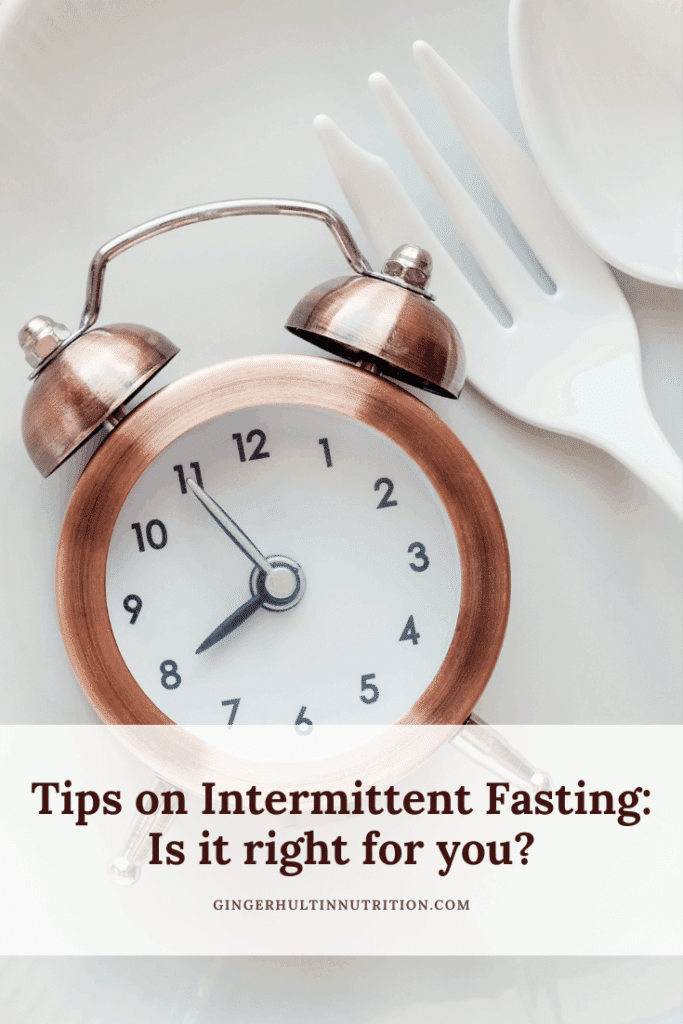
Intermittent fasting (IF) is an umbrella term for eating patterns that cycle between periods of eating and periods of fasting. It does not necessarily dictate what foods to eat, but rather when to eat them.
Here are the most common methods:
Protein and fiber are typically emphasized on fasting days to help with satiety.
This is a more extreme approach and may increase hunger, fatigue, and irritability. It is not appropriate for many individuals.
Some people experience headaches, low energy, and mood changes with longer fasting windows.
This is the most common and generally the gentlest form of intermittent fasting. Because you already fast overnight while sleeping, many people find this approach easier to implement.
However, if you have a history of chronic dieting, weight cycling, disordered eating, or an eating disorder, structured fasting may not be appropriate. Individual assessment matters.
Many people pursue intermittent fasting for weight loss. Some studies show modest weight loss results, but systematic reviews suggest that intermittent fasting does not consistently outperform other calorie-controlled approaches.
It is also important to note that much of the early research has been conducted in animals, and human data is still evolving.
More importantly, intermittent fasting is often another form of restriction. Before starting, ask:
These questions matter.
When I talk with clients about intermittent fasting, I usually start with something very simple:
Fast overnight while you sleep.
That means:
A pattern I frequently see is:
This cycle often disrupts hunger cues, sleep, and energy regulation.
Fueling earlier in the day and allowing a natural overnight fast supports circadian rhythm and metabolic stability. For many people, this gentle structure makes a meaningful difference.
If you and your dietitian decide intermittent fasting is appropriate, here are practical tips on intermittent fasting to consider:
Do not copy someone else’s fasting window. Base it on:
If you wake up hungry, eat breakfast. If you naturally prefer a later first meal, that may work too.
Fasting should not mean under-fueling. Focus on:
Some research suggests eating more calories earlier in the day may support metabolic health. While more research is needed, aligning intake with natural daylight hours may benefit circadian rhythm.
Eating late at night and drinking alcohol close to bedtime can disrupt sleep architecture.
Quality sleep supports metabolic regulation. During REM sleep, your body naturally utilizes stored energy. Poor sleep reduces time spent in deeper sleep stages and may impact overall metabolic health.
Research suggests potential benefits may include:
Studies on shift workers show that disrupted circadian rhythms are associated with increased risk of metabolic disease. Timing of food intake appears to play a role in long-term health.
That said, intermittent fasting is not a magic solution. Food quality, stress, movement, and sleep all matter.
Intermittent fasting is not suitable for everyone.
It should be avoided or closely supervised in individuals who are:
If you are unsure whether intermittent fasting is safe for you, consult your healthcare provider or registered dietitian.
Also ask yourself why you are interested in fasting. If the motivation is rooted in restriction or punishment, it may not support long-term health.
If your goal is to stop skipping meals and create a more balanced daily rhythm, starting with breakfast can help.
Some simple options:
Intermittent fasting is a complex topic that requires an individualized approach. For some people, structured timing can support metabolic health and reduce late-night eating. For others, it may increase stress around food.
If you’d like personalized guidance and practical tips on intermittent fasting tailored to your goals, contact me to schedule a nutrition session.
GINGER HULTIN NUTRITION SEATTLE
158 SW 148th St #1012
Burien, WA 98166
Phone: 509-557-0545
Fax: 206-539-0062
Ginger@gingerhultinnutrition.com